Resurrection may only be Bi Gan’s third full-length feature film, but this genre-spanning epic feels like the exact kind of bold artistic statement he’s been trying to make his entire career. If his prior film Long Day’s Journey into Night put its own protagonist’s inner dreamscape on film with admirable ambition, Resurrection pushes this surreal idea to its very furthest limits. Cycling through a series of ever-shifting dreams that could just as easily be our own, Resurrection is an abstract anthology film that loosely hinges on a single overarching story, but is mostly meant to be watched as a mesmerizingly magical experience. If one can give into Resurrection on that level, they’re sure to be treated with one of the most uniquely awe-inspiring pieces of cinema to emerge from last year, if not the entire decade thus far.
Entirely portrayed as a sly silent film, Resurrection’s opening section takes place within an alternate universe where all of humanity has had to give up the ability to dream, just for the sake of gaining immortality. The only beings who still retain that special ability are known as “Deliriants”, with the regular humans tasked with tracking these rebellious outcasts down for their treason being dubbed “The Other Ones”. One such Deliriant, who takes the form of a monstrous beast, is found by an Other One right as it’s dying. Since this particular Deliriant hides inside films to keep dreaming, this Other One decides to install a film projector inside his body to grant it a mercifully gentle death. From that very point onwards, Resurrection follows this same Deliriant’s varying human manifestations inside the last dreams he’ll ever have.
If all of this sounds rather odd, it’s nothing compared to how much stranger Resurrection becomes with each passing segment. Just like any of our own dreams, some of them feel relatively grounded and ordinary, whereas others are boldly bizarre beyond anyone’s wildest imagination. While none of these segments are necessarily connected from a narrative standpoint, each touches on a notable facet of Chinese history and represents the six human senses as taught in Buddhist philosophy (sight, hearing, smell, taste, touch, and mind). Given their mainstream pop appeal, M83 may be the last band one would expect to work with a filmmaker like Gan, but their ethereal electronic score feels like a real match made in heaven for his vision. It really makes for one of the year’s most stunning soundtracks, bar none, as well as one of the finest musical feats of M83’s entire career.
The true high point of Resurrection is its penultimate segment, serving as the Deliriant’s final dream, unfolding across the final hours of New Year’s Eve 1999 in a soaring 30-minute single continuous take. Set in a rainswept Hong Kong, this segment is remarkable on a visual level, capturing this city’s neon-lit beauty with such a striking eye for detail. It’s also blessed with the film’s strongest storytelling by far, gradually morphing from gritty gangster-noir to gruesome vampire horror. Gan has crafted lengthier long takes before (for one thing, the entire last hour of Long Day’s Journey into Night), but this one still feels like the most impressive for the violent carnage it so fluidly captures. Even removed from the rest of Resurrection, this entire segment would still be a perfect short film in its own right, not to mention the very finest piece of filmmaking Bi Gan has ever put to screen. Placed within the film, however, it provides such a fantastic finale to this insurmountable journey across space and time.
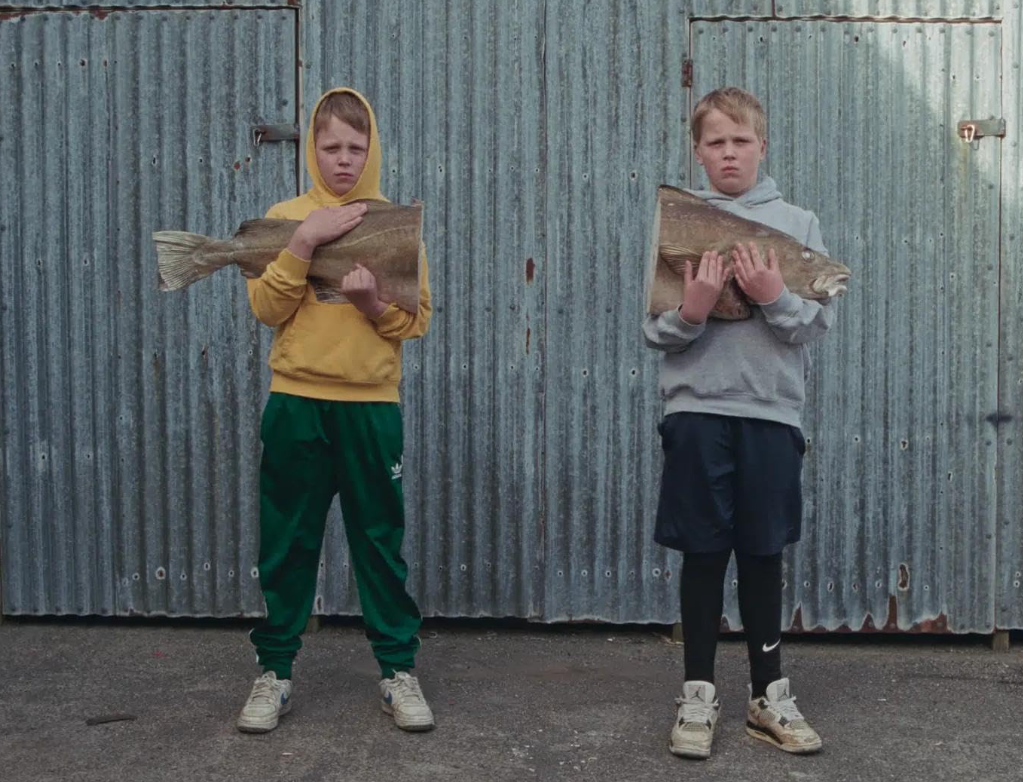
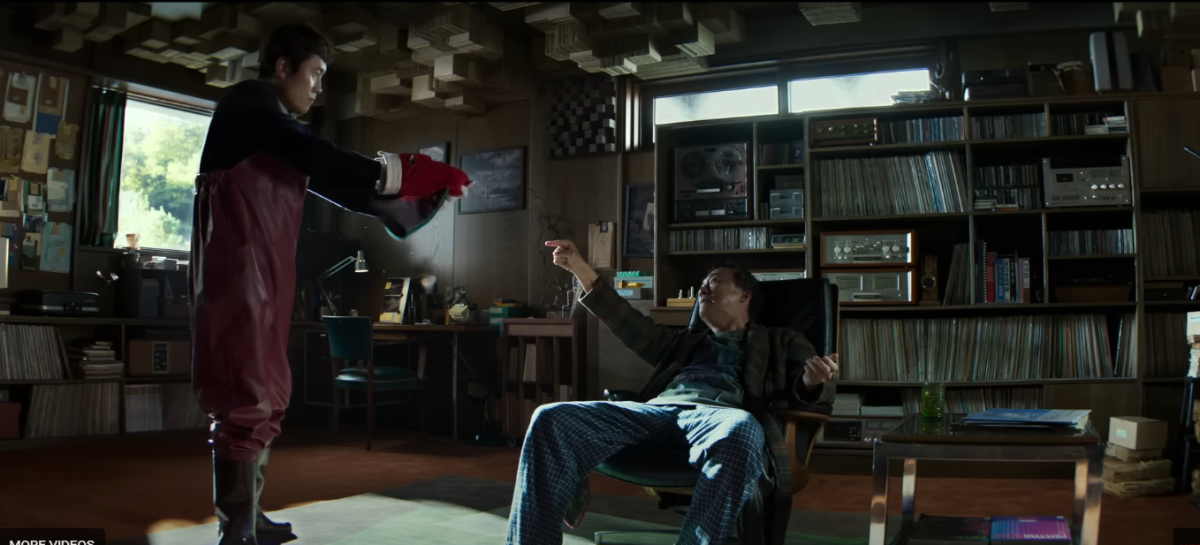
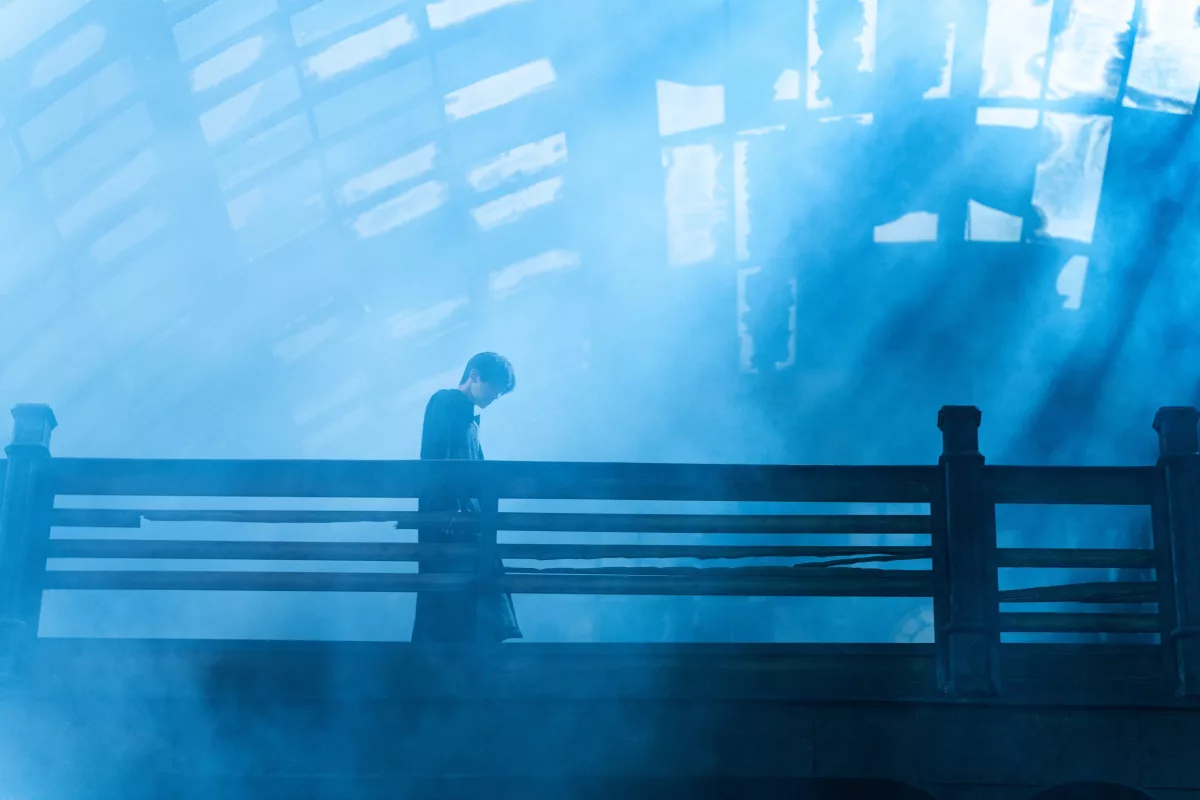
As wondrous as Resurrection really does feel, judging it on a section-by-section basis is admittedly a much trickier task. An inherent risk of anthology films is that some segments can be stronger than others. Despite Gan’s undeniable creative genius, Resurrection is also slightly beset by this as well. For Gan to save the film’s most visually and conceptually dazzling part for last feels very rewarding, yet the segments before it aren’t quite on the same level of brilliance. One segment set in a dilapidated Buddhist temple feels much slower than the others around it to a fault, even though it’s still aesthetically gorgeous. The next segment, which follows a con man and a young female orphan who’s his sidekick (à la Peter Bogdanovich’s Paper Moon), is far less visually interesting than the others around it. Perhaps it was intentional on Gan’s part to present a significantly less stylized setting here, yet this more stripped-back presentation is rather jarring. No other segment is necessarily as flawed per se, but they all still pale in comparison to the aforementioned Hong Kong section.
Even if Resurrection can feel uneven at times, it is nonetheless the exact type of undeniably imaginative cinema that deserves to be championed. At its very best, it represents Bi Gan at the peak of his powerful filmmaking prowess, building off the jaw-dropping technical mastery of his past work. With each section having its own distinct style paying tribute to a different type of cinema, it never threatens to grow stale. In the opening silent film segment, M83’s soundtrack even models itself after real silent film scores of that era, eventually mixing in more unusual instrumentation to suit the off-kilter imagery on display. Taken as a whole, Resurrection ambitiously aims to capture the true magic of movies in all their different forms, which might have come off as trite or treacly if Gan’s approach wasn’t so wonderfully weird. Whether one ultimately comes away from this film analyzing its deeper themes or simply having absorbed its entrancing visual poetry, it’s nothing less than an unforgettable cinematic odyssey.
Much like Park Chan-Wook’s No Other Choice, Resurrection is another case of exceptional Asian cinema being entirely snubbed by the Academy this year for no discernible reason. Both of these films may have been made with incredibly different goals in mind, but each should have received Oscar attention for their outstanding technical merit alone. Any arthouse work this long and strange certainly isn’t made to appeal to everyone, but at the very least, its phenomenal craftsmanship is not to be dismissed whatsoever. Even the film’s weakest segments still have a lot to appreciate, always displaying a clear sense of personal passion. Many other surrealist filmmakers have explored the nature of tapping into one’s unconscious self (namely, David Lynch), but none have ever pulled that off in quite the same way as Bi Gan has here. Although Resurrection might seem entirely inaccessible to more general audiences, for those who can get on its adventurous wavelength, this is truly one mind-bending cinematic marvel for the ages.