If there was ever an apt director to boldly update Jang Joon-hwan’s hostage thriller Save the Green Planet! to suit America’s recent conspiracy theory crisis, it would definitely be Yorgos Lanthimos. Bugonia may be this oddball Greek provocateur’s first-ever remake, yet its strange concept still hews remarkably close to his own off-kilter creative sensibilities. Joon-hwan’s original film was most notably inspired by Rob Reiner’s genre classic Misery, itself adapted from Stephen King’s novel of the same name. Even so, its peculiar premise suitably lends itself to more modern anxieties. No wonder a Western reimagining of this same story arriving in the current year feels quite so timely. In carrying over the action to another setting altogether, Lanthimos applies its sadistic thrills to this present-day age of radicalized fearmongering, sharply demonstrating just how dangerous one’s delusional-sounding beliefs can be.
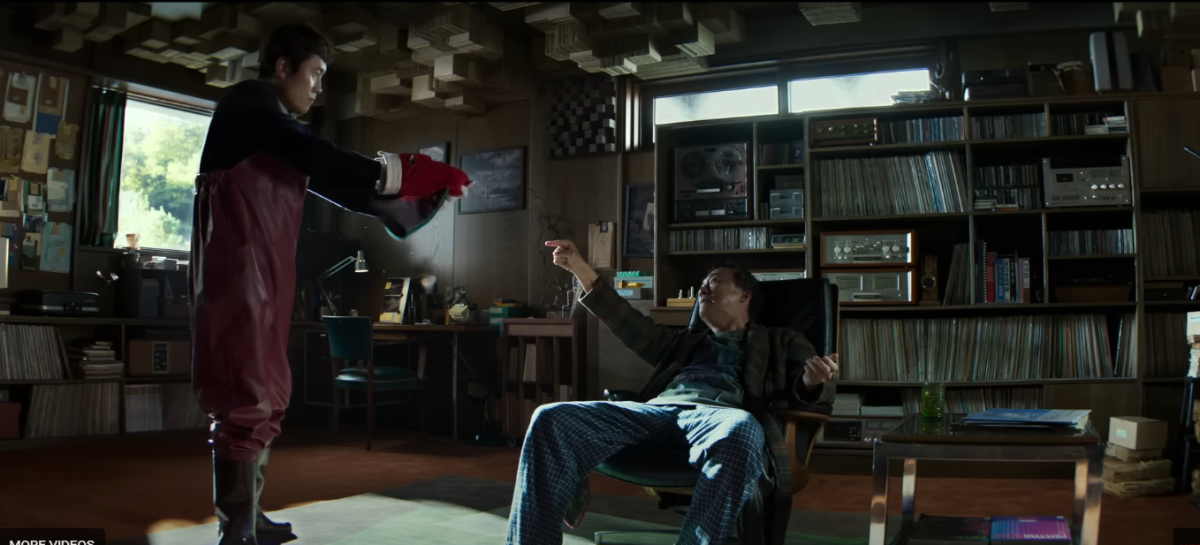
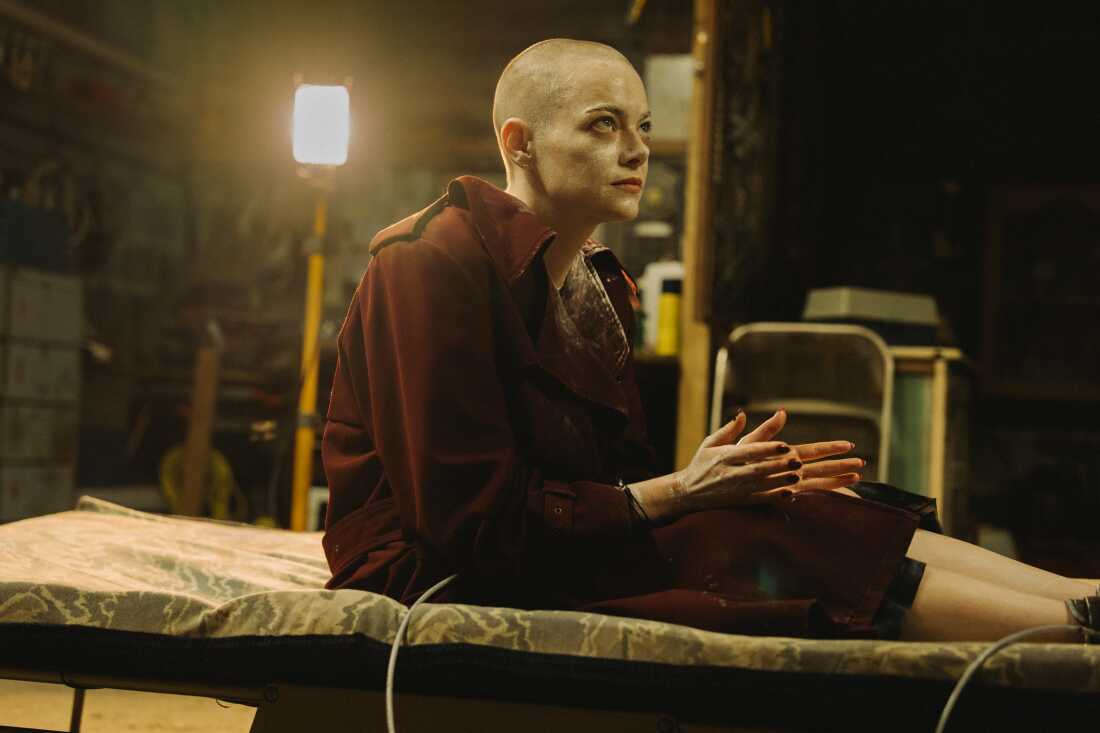
The original Save the Green Planet! centered on a crazy husband and wife who abduct a well-off pharmaceutical executive, believing him to actually be an alien from the distant planet “Andromeda PK 45.” Bugonia changes the two hostage-takers to the conspiracy theorist Teddy Gatz (Jesse Plemons) and his mentally disabled cousin Don (Aidan Delbis, an autistic actor himself), and their hostage to the high-powered CEO Michelle Fuller (Emma Stone). In both versions, the abductees’ convictions are ostensibly unfounded, even while they try their very hardest to prove the person chained up in their basement is not of human origin. Bugonia amplifies that tension by contrasting Teddy & Don’s insane rantings with Michelle’s calm rationality, a surprising level-headedness she maintains while trying to talk sense into the nutjobs who have kidnapped her, shaved her head, and forced her to cover her own body in antihistamine cream to—in their minds—prevent her from contacting her alien mothership.
Without Stone’s and Plemons’ utter commitment to their lead roles, both of whom are tensely pitted against each other throughout, this compelling central dynamic would be nowhere near as strong. Stone’s quick-witted saviness in the midst of her terrifying situation makes her such an entertaining screen presence, particularly when she tries reasoning with these two maniacs through quippy corporate-speak (“Let’s have a dialogue about this”). Plemons, on the other hand, embodies the psychopathic freak who holds her hostage with frightening conviction, revealing a level of real menace not often present in him otherwise. Through surrealistic black-and-white flashbacks, the traumatic past that sent him down this dark path is gradually revealed, but the extreme measures he resorts to from being so damaged are scary nonetheless. Even Delbis, although playing a more minor role compared to his two co-stars, brings surprising depth to this disabled man whose only companion is this deeply disturbed relative.
If the original version of this premise tried to illustrate how conspiracy culture can turn an emotionally unstable person into a vicious maniac, Bugonia applies that to current Internet-fueled misinformation. That really adds an extra layer of relevancy to this modernized remake (the original film being from 2003), emphasizing just how prevalent dangers to one’s mental health can be with conspiracies across any culture or time period. Indeed, the story itself is deeply depressing at its core, pushing these broken people well past their individual breaking points. Lanthimos’ other titles are typically known for their black humor (especially in his droll dystopian satire The Lobster), yet nothing is funny about the bleak fates some of these characters are met with. Save the Green Planet! still managed to be more overtly comedic, but Bugonia fully embraces the seriousness of its premise to much greater effect.
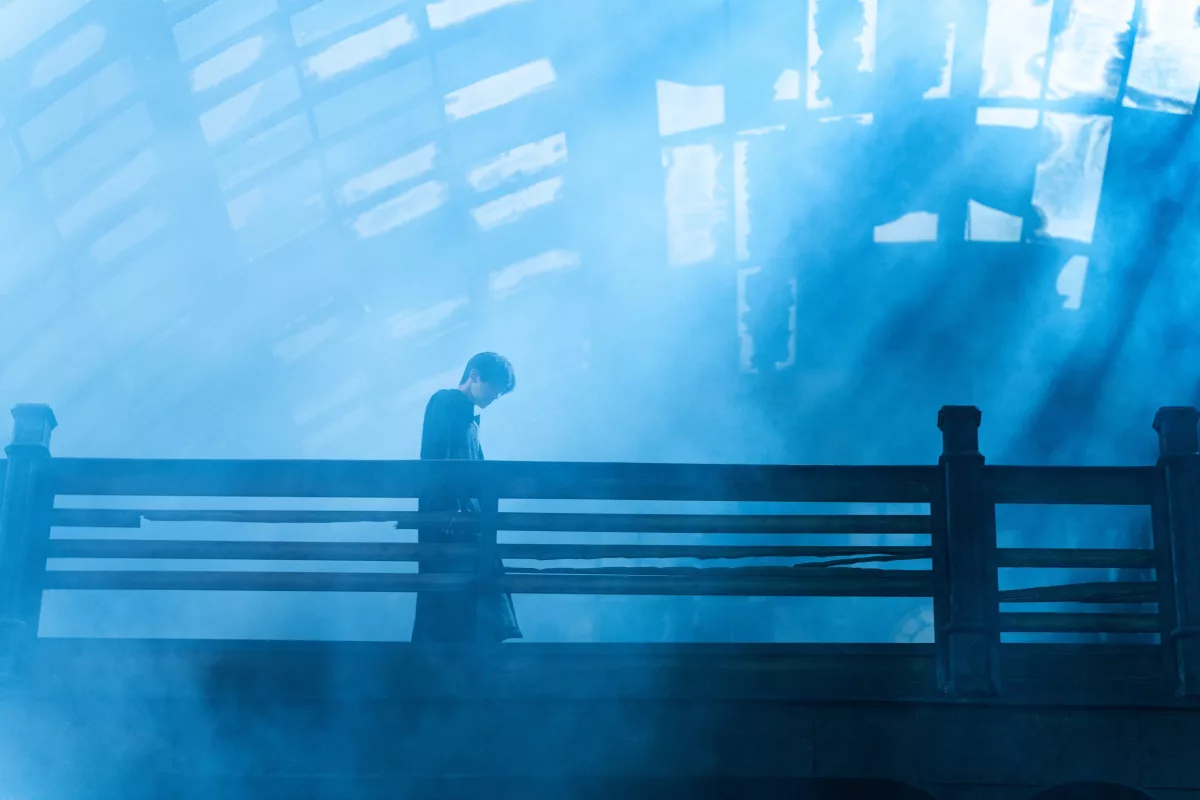
Lanthimos’ directorial style heightens the strong paranoia overwhelming every scene, which only increases as this suspenseful sequence of events continues to escalate. Perhaps his artistic voice is most prominently felt in the smooth, static camerawork, since the acting style is less intentionally stilted here than in his other output. Even if that might come as a surprise to dedicated Lanthimos devotees, it does feel appropriate for how naturalistic this film is in portraying these unsettling characters. Composed by longtime collaborator Jerskin Fendrix, the bombastic orchestral score is both eerie and exciting, adding to the uneasy mood sustained throughout. It’s also shot with eye-popping beauty by another of this director’s past collaborators (Robbie Ryan), who excellently utilizes the recently-revived “VistaVision” format to bring out the decrepit urban setting’s stark color.
In either version, what may make-or-break this story for some viewers is its conclusion. Without giving anything away, the twist ending adds an entirely new meaning to the central dilemma at play throughout, yet also removes any remote sense of ambiguity. Instead of leaving off events in a more open-ended manner, it reveals all that’s really going on for the sake of dour dramatic irony. This could be viewed as the natural tongue-in-cheek reveal for such a story to build towards, yet it’s still jarring in how out-of-left-field it feels. Bugonia’s final twist is executed better than Save the Green Planet!’s, with that film’s very last sequence transformed into a memorably haunting final montage here. Still, it begs the question of whether or not this was even essential to incorporate at all. It may be a pretty bold note to end on, but that doesn’t make it the most necessary note to end on, either.
Whether or not its final twist rubs you the wrong way, Bugonia is still a compellingly twisted work from one of modern cinema’s most skilled visionaries. Despite largely following the same beats as Joon-Hwan’s original film, Lanthimos successfully molds such material into a far more polished and tonally consistent product. It’s likely the closest to full-on horror he’s gotten since The Killing of a Sacred Deer, a harrowing psychological nightmare that still carried his trademark flair for pitch-black absurdism. Bugonia operates in a fairly similar vein to that, even though the story’s immense grimness ensures it isn’t as humorous as Lanthimos’ prior films. Considering that his brilliantly bizarre fantasy Poor Things was only released a couple of years earlier, Bugonia probably can’t be called his most ambitious effort from this decade, but that doesn’t mean it shouldn’t occupy a distinctive spot within his unusual catalogue. If Lanthimos’ recent claims that he’ll take an extended break from filmmaking turn out to be true, that makes Bugonia all the more significant as a fiery final cinematic statement.